Services
London plumbing services
Choose the problem that best matches your job and request a fixed quote before work starts.
Plumbing Repairs
Same-day repairs for leaks, broken fittings, poor pressure, noisy pipes and small plumbing faults across London.

Blocked Drains
Fast help for sinks, toilets, showers and outside drains that are slow, blocked or backing up.

Leak Detection
Trace hidden leaks, damp patches and unexplained water usage before damage spreads.

Burst Pipes
Contain and repair burst pipe damage, isolate water, and restore safe plumbing where possible.

Toilet Repairs
Repairs for running toilets, weak flushes, leaks around the pan and broken cistern parts.

Tap Repairs
Fix dripping taps, stiff mixer taps, leaking connectors and tap replacements.

Shower Repairs
Help with leaking showers, poor flow, broken valves and shower waste problems.

Boiler Repairs
Support for common boiler faults, pressure problems, heating issues and hot water failures.

Radiator Repairs
Repair cold radiators, leaking valves, trapped air and heating circulation problems.

Water Heaters
Plumbing support for hot water cylinders, heaters, valves and supply problems.

Bathrooms
Bathroom fitting repairs, wastes, taps, toilets, showers and small installation work.

Commercial
Responsive plumbing help for offices, shops, landlords, agents and small businesses.
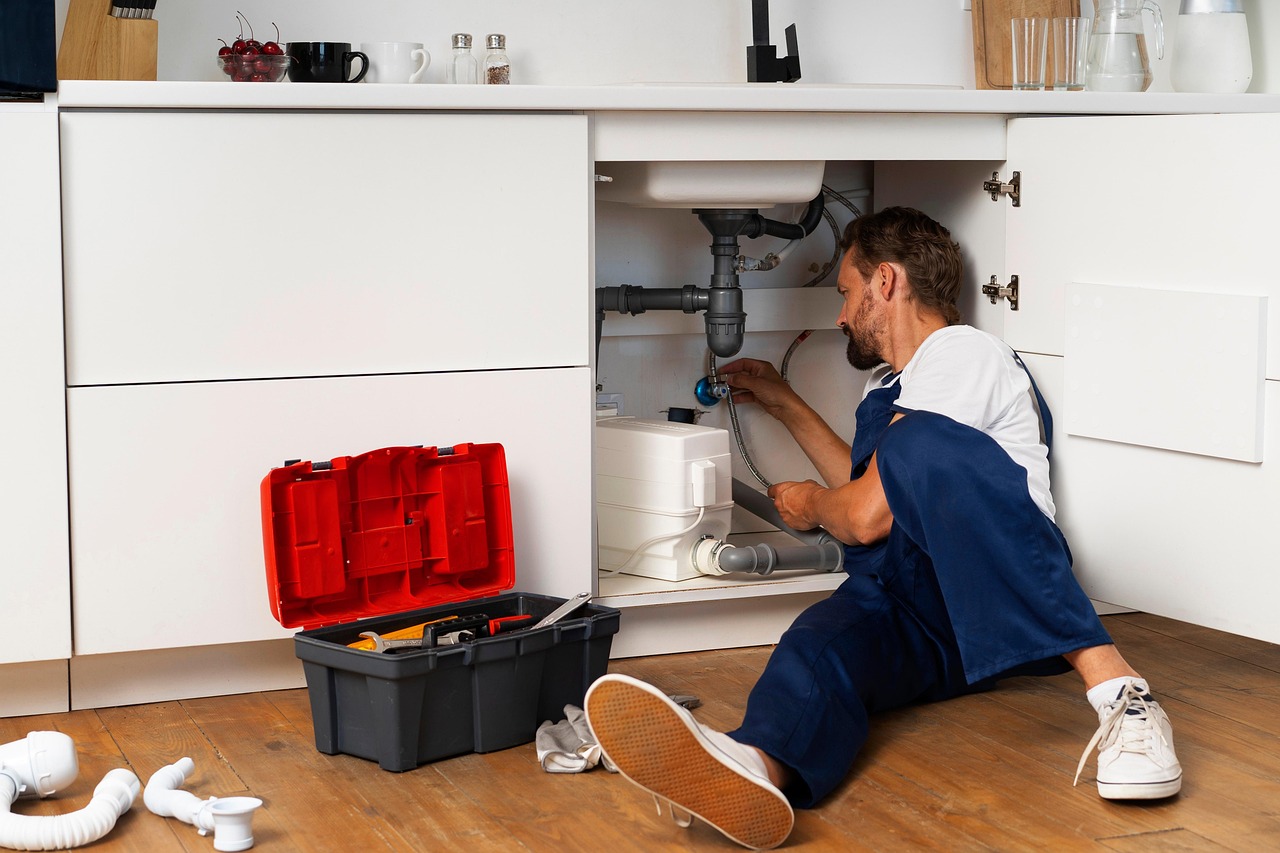
One plumber, every job
The same engineer can handle more than one fault
If more than one thing needs sorting, whether that's a dripping tap and a slow drain, mention both when you call and we'll quote for the whole visit.
Plumbing guide
Finding the right plumbing service for your problem
Every job on this site is grouped by the problem it solves, not by trade jargon, so you can find leaks, blocked drains, burst pipes, toilets, taps, showers, boilers, radiators, water heaters, bathrooms and commercial plumbing without needing to know the correct term for what is wrong.
If your problem clearly matches one of the pages below, start there for symptoms, prep steps and pricing detail specific to that job. If it could fit more than one, read on; plumbing problems overlap more often than people expect.
Matching your symptom to the right page
A constant drip usually points to tap repairs. A cistern that keeps refilling itself points to toilet repairs. A radiator that stays cold at the top despite bleeding points to radiator repairs. No hot water at all, rather than just low pressure, often points to water heater repairs or boiler repairs depending on the setup.
A slow-draining sink or shower usually means blocked drains. A ceiling stain with no obvious source above it means leak detection. A pipe that has actually split needs burst pipe repair straight away rather than a routine visit.
When more than one service could apply
A leaking shower could be a waste pipe problem, a tray seal failure, or a bathroom plumbing issue depending on where the water is actually coming from. A boiler that keeps losing pressure could be a boiler fault, a radiator valve leak, or a hidden pipe leak nowhere near the boiler itself.
You do not need to diagnose the exact cause before calling. Pick the page that sounds closest, or just ring 020 3907 3663 and describe the symptom; we will work out which service it actually needs.
What you will find on every service page
Each one covers the signs worth acting on quickly, what we typically ask for on the call, roughly how pricing works for that type of job, and the other repairs that tend to come up alongside it.
They also cover how the job changes depending on your property: a Victorian terrace, a converted flat, a managed block or a shop unit can all need a slightly different approach even for the same underlying fault.
Repairs that are worth booking together
If a boiler pressure fault has left you also chasing a leaking radiator valve, or a blocked drain has left a tap dripping that nobody has got round to fixing, mention both when you call. We would rather quote for everything in one visit than have you book us twice.
This comes up most with older properties and rented flats, where several small faults tend to get reported at once rather than as they happen.
Commercial plumbing sits alongside the rest
Shops, cafes, salons and offices need the same repairs as a house: leaks, blockages, tap and toilet faults, and heating issues. The difference is usually timing and disruption, which is why commercial plumbing has its own page covering work outside trading hours and staff washroom priorities.
If you run a business and the fault is affecting customers or staff facilities, say so when you call; it changes how quickly we try to get to you.
Getting a price agreed
Whatever brought you to this page, the pricing process stays the same: we look at the job, agree a fixed figure with you, and only then start work. If the scope changes once we are on site, for example a straightforward repair turning out to need a part replaced, we stop and talk to you again before carrying on.
That agreed-price step matters most when the person approving the cost is not the person on site, which is exactly the situation most landlords, agents and business owners are in.
Before we arrive
If water is running, isolate it if you safely can, using the stopcock or nearest valve. Do not force anything that will not turn. Keep clear of any electrics near water, move belongings out of the way, and take a few photos once things are under control. If a drain is blocked, stop using the affected fixture rather than continuing to run water into it.
In flats and managed buildings, check whether building management controls any shared valves or riser access before we get there. If the property is rented, tell the landlord or agent early if their sign-off is needed before work can go ahead.
Recognising a genuine emergency
Treat it as urgent if water is actively escaping, a ceiling is dripping, electrics might be affected, a toilet cannot be used, a drain is backing up, a business cannot operate normally, or someone vulnerable has no hot water or heating. These situations need a same-day decision, because delay tends to make the damage or the disruption worse rather than better.
Contained issues can still go through the quote form rather than a phone call. If a leak has stopped, the water is isolated, or a fixture can simply be left unused for now, describe the problem and we will call you back to arrange a convenient time instead.
Describing the problem clearly
Be specific about the room, the fixture and when it started. Say whether it is under a sink, behind a toilet, near a radiator, below a bath, around a shower tray, inside a kitchen unit or outside near a drain. Mention whether it started suddenly, only happens when a fixture is in use, or has been getting worse over a few days.
If there is water, say whether it is dripping, running, pooling or just showing up as a damp patch. If there is a blockage, say whether it is one fixture or several running slowly at once. If it is a boiler pressure problem, say how often it drops and whether any radiator valves or nearby pipework look damp.
Staying safe until we arrive
Do not lift flooring, remove panels or force valves you are not sure about. Avoid using the affected fixture if we have advised against it. Keep clear of any water near sockets, switches or appliances, and mention that when you call. If a ceiling is leaking, a container underneath is fine if it is safe to place one, but stay well away from any plaster that looks like it is sagging.
In flats and managed buildings, tell a neighbour or the building manager if water might be travelling between properties; shared plumbing can make the source hard to pin down, and an early heads-up avoids access problems later. If you run a business, keep staff and customers clear of wet floors and let us know if trading is affected.
What a fair quote actually looks like
A fair quote states the job clearly, covers labour and any parts needed, and does not change once work has started unless the scope genuinely changes. It should not leave you guessing what is and is not included. If a job might need a follow-up visit, for example to let plaster dry before a wall is made good, we say so at the quote stage rather than after the invoice lands.
Not every job costs the same, because not every property is the same. A ground-floor flat with an easy-to-reach stopcock is a different job to a boxed-in pipe run behind a bath panel in a top-floor conversion. What stays consistent is the order things happen in: we look, we quote, you agree, then work starts.
Phone or quote form: which to use
Call 020 3907 3663 when the problem is active, spreading, or stopping you from using the property normally. Use the quote form when it is contained, when you would rather book a convenient time, or when a landlord, tenant or agent needs the details written down before approving the visit.
Either route gets you to the same place: we understand what is wrong, confirm when someone can come, and agree the price before work starts. Neither one commits you to anything until you have said yes to the quote.
Getting ready for the visit
Before the plumber arrives, clear access to the affected area if it is safe to do so: empty the cupboard under a sink, move boxes away from a boiler, or unlock a meter cupboard if that is where access is needed. Make sure someone can answer a call from an unknown number around the appointment time, in case the plumber needs to confirm anything on the way.
If the property is rented, tell the landlord or agent as early as possible so their approval does not hold up the visit once a slot is booked. If you are in a managed block, check whether the building manager needs to be involved for lift access, concierge sign-off, or a shared riser cupboard.
Common reasons people get in touch
Most calls start with something visible or inconvenient: a ceiling stain after a shower upstairs, a blocked kitchen sink, a toilet that keeps refilling, a tap that will not shut off, a wet patch near a pipe, a boiler pressure drop, or a drain smell that keeps coming back. The sooner the symptom is described clearly, the easier it is to work out whether it needs urgent attention or a planned visit.
Some faults are not dramatic at first. A small drip can damage cabinets, flooring and plaster if it is left. A slow drain can become a full blockage within days. A pressure drop can point to a leak nowhere near the boiler itself. A short call is usually enough to turn a vague worry into a clear next step.
Keeping the call short
You should not need to work through a long list of questions before speaking to someone. The basics get things moving: the type of problem, your name, phone number, postcode and a short explanation of what is happening. Anything more detailed can be sorted out once we are talking, rather than making you pick a technical term for a fault you have never had to name before.
Describing what you can actually see matters more than getting the terminology right. We would rather hear "water dripping from the light fitting below the bathroom" than have you guess at a diagnosis over the phone.
Explore the site
Common questions
Do you cover the whole of London?
Yes. We work across all 32 London boroughs, with a page for each one covering local property types and the services on offer there.
Will I get a price before anyone starts work?
Yes. We look at the job, agree a fixed price with you, and only then start work.
Can someone come out at night or on a weekend?
Yes. We run a 24/7 line and will give you a straight answer on the next available slot rather than a vague callback promise.
Do you deal with landlords, agents and rented properties?
Yes. We work with landlords and letting agents regularly, and are used to arranging access with a tenant while the landlord approves the cost.
What if I am not sure which service I need?
Call 020 3907 3663 and describe what you are seeing in plain terms. We will match it to the right service ourselves.
Do the service pages overlap?
Yes, deliberately. Plumbing faults rarely sit in one neat category, so related services are linked from every page.